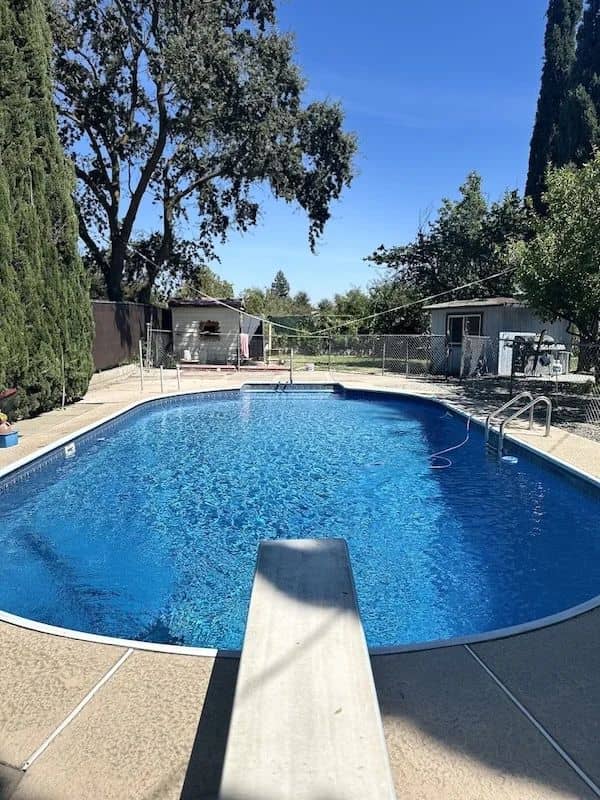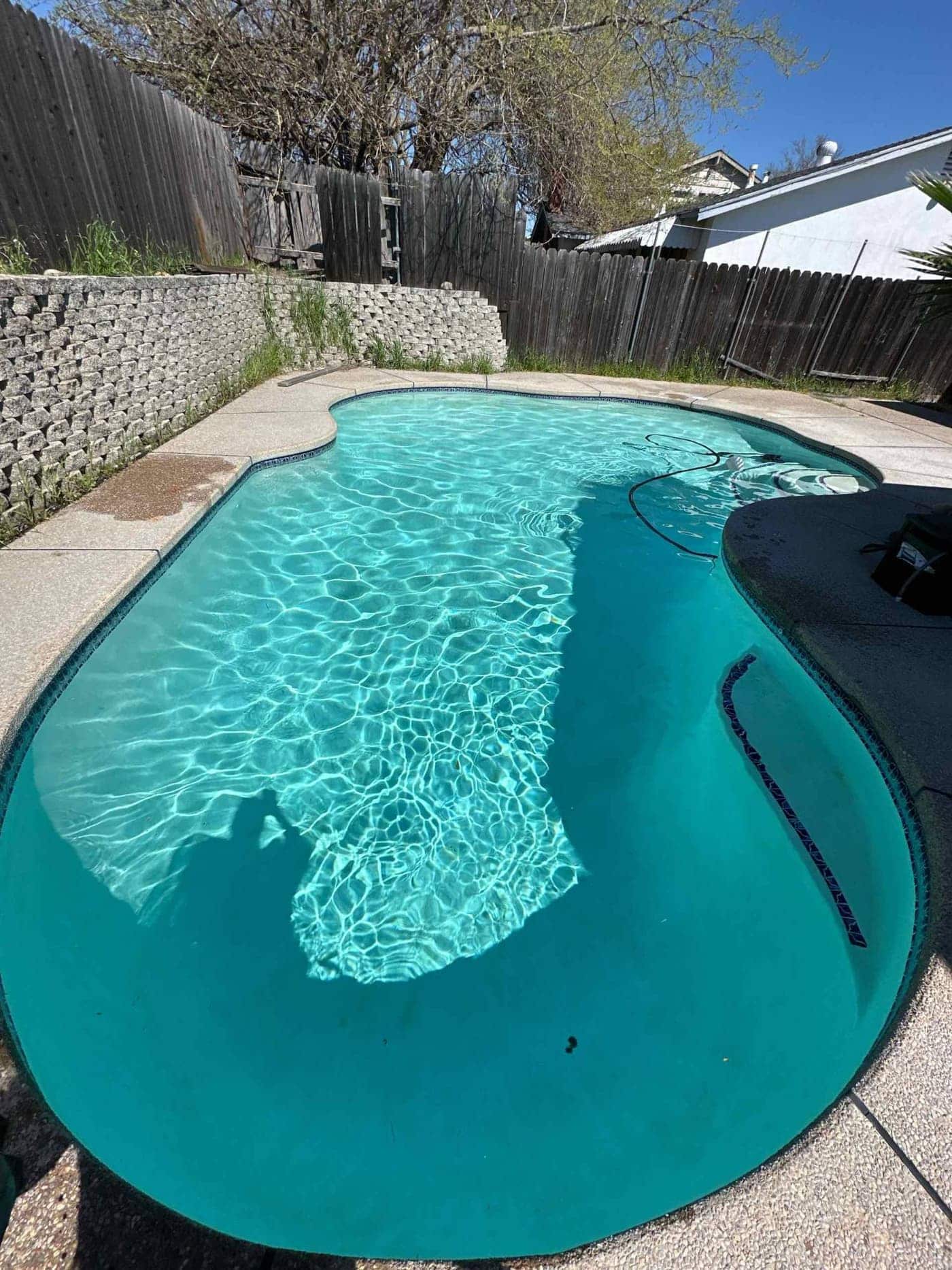

A green pool is not dirty water. It is water with something growing in it. That something is algae, and understanding why it showed up is the first step to making sure it does not come back.
What actually turns a pool green
Algae spores are always around. They blow in on the wind, ride in on leaves and arrive on swimsuits. In a healthy pool the chlorine kills them as fast as they land.
A pool turns green when that balance tips: the chlorine level stays too low for too long, and the algae gets ahead. Once it does, it multiplies quickly. A pool can go from slightly dull to clearly green in a few warm days.
The usual causes
Heat and sun. Sunlight breaks chlorine down, and hot water uses it up faster. A dose that lasted a week in April may be gone in days in July.
Not enough circulation. Chlorine only works where the water is moving. A pump that runs too few hours, a filter that is overdue for a clean, or baskets packed with leaves all leave dead spots where algae starts.
Debris. Leaves, pollen, ash and dirt do two things: they use up chlorine, and they add phosphates, which algae feed on.
Water out of balance. When pH drifts too high, chlorine gets much less effective even if the reading looks fine.
A missed week. Any of the above, plus a week or two with nobody watching, is the most common story of all.
Why it happens so often in Sacramento
Two seasons catch people out here. The first is the spring warm-up, when the water temperature climbs and pools that coasted through winter suddenly need real chlorine again. The second is summer heat, when triple-digit days burn through sanitizer between visits.
Fire-season ash and heavy tree debris speed everything up. A pool under a big oak, or one that just sat through a smoky week, needs more attention than the calendar suggests.
How green is it?
The shade tells you a lot about what it will take.
- Hazy or cloudy: you can still see the floor. This is often not a full cleanup yet.
- Light green: algae has started. A standard green-to-clean handles it.
- Dark green: the same process, with more algae and debris to remove.
- Can’t see the bottom: this is usually the point where draining makes more sense than treating, though how long it has been green and the time of year matter too.
How a green pool gets fixed
At Ripple, a green-to-clean starts before we arrive. We look at photos of the pool first, so the plan fits what is actually there. Then:
- The water is fully balanced, so the treatment can work.
- The pool gets an algaecide treatment to kill the algae.
- The debris is vacuumed out to waste with a separate unit, instead of being pushed through your filter. Dead algae and sludge are what crack filter manifolds and ruin cartridges, and they can damage a heater on the way through.
- The pool is brought back to blue, usually within two to three visits.
After that, a six-month algaecide post-treatment is available. It helps against the tougher forms, such as mustard algae and black algae.
When draining is the better answer
If the water is so dark that the floor has disappeared, treating it can take longer and cost more than starting over. A drain and clean empties the pool, clears out the sludge and chlorine washes the surface and tile, with a one-day turnaround.
Not sure which side of that line your pool is on? A photo is usually enough for us to tell you.
Keeping it from coming back
Algae is far easier to prevent than to remove. Consistent chlorine, clean baskets, a filter that is cleaned on schedule and someone checking the water every week are what keep a pool blue. On Ripple’s weekly service, that is backed by the No Green Guarantee: if your pool turns green on our watch, we clear it for free.